
PRESENCE AT THE END - DEATH DOULAS IN THE SPOTLIGHT
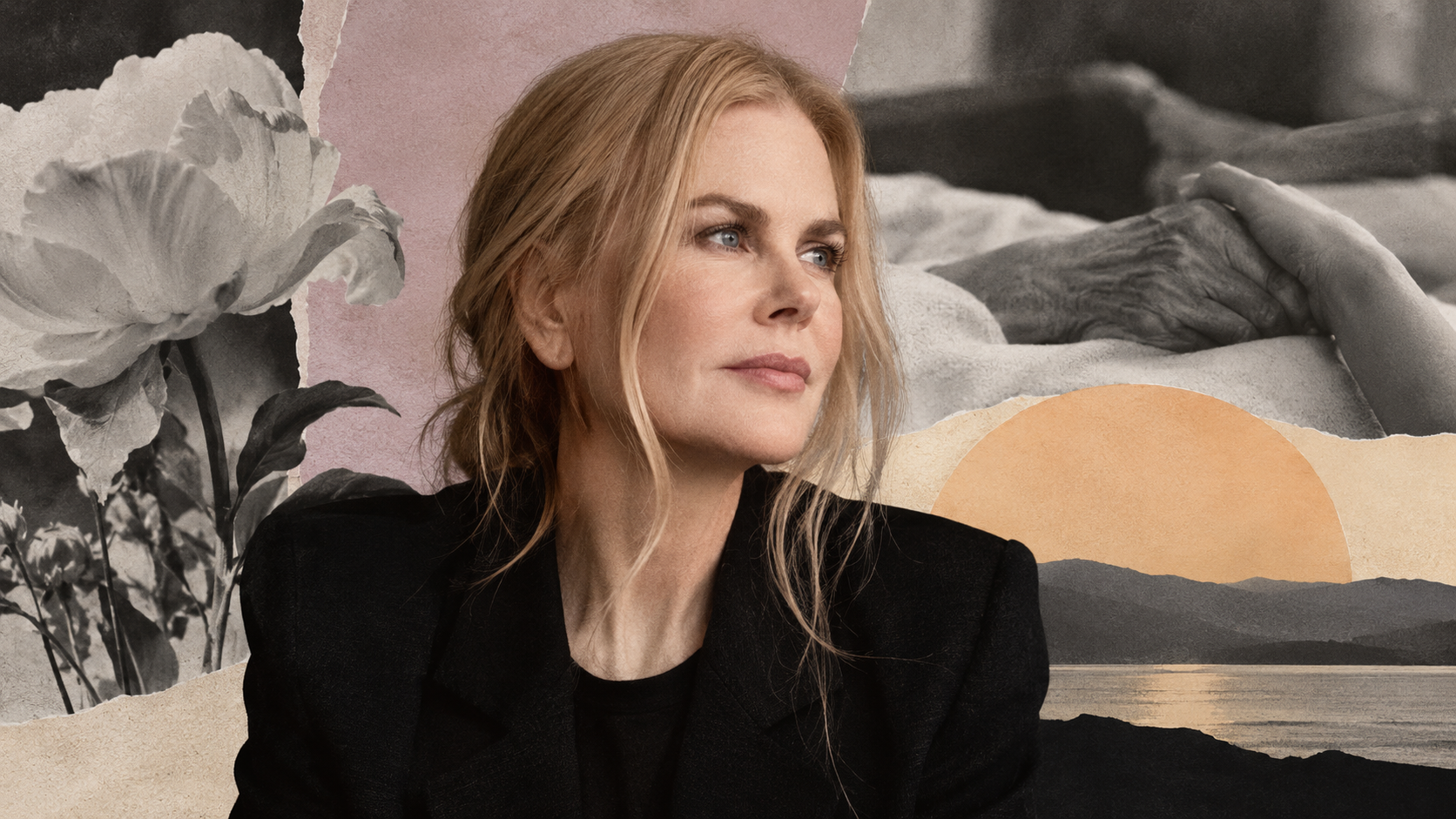
AI-generated editorial illustration created with OpenAI for this Good Grief article. Inspired by the visual language of contemporary magazine features.
Death doulas are having a moment. In the US, celebrities are bringing a once relatively niche role into the spotlight, opening up conversations about how we want to die, who accompanies us, and what it means to care for someone at the end of life.
In April this year, Nicole Kidman spoke publicly about training as a death doula. She described how lonely her mother had been in her final months, and how the family, stretched across careers and children and continents, could only do so much. "I wish there were people in the world who were there to sit impartially and just provide solace and care," she said. Filmmaker Chloé Zhao has trained as a death doula too, as has Riley Keough, who completed her training after the death of her brother.
More visibility for this kind of work is always great but what’s interesting about Kidman, Zhao and Keough isn’t only that they trained to become death doulas – it is why. None of them saw a career opportunity. They trained because someone died and they didn’t know what to do with that. For them, becoming a death doula was as much about processing their own grief as it was about acquiring a skill.
I recognise that pattern. My own path into this space started with my great-aunt's final weeks and the funeral that followed. Something felt missing back then… a kind of knowledge and presence that that I didn’t have. Almost everyone I met so far who is building something in this space, whether it's a new product, a service, or a community, can point to a moment when something went wrong, or felt wrong, and they decided to turn it into something else.
That is heartening. When you think about it, it's also a little heartbreaking. So much of what is being built here begins with a loss that didn't go as it should have.
Which is why I paid attention this summer when the death doula conversation entered a different register. More visibility, more prominent voices, more people asking out loud: what does it actually mean to die well, and who is supposed to help us get there?

Slide by Compassion & Choices (compassionandchoices.org), seen on Facebook
An old role with a new name
An end-of-life doula offers non-medical support to people approaching death and those close to them. This can include conversations about dying, emotional and spiritual support, end-of-life planning, legacy projects, practical guidance and simply being present.
The role itself isn't new. Across cultures and throughout history, dying was largely accompanied by family members, often women, alongside neighbours, community caregivers and spiritual figures. Much of this work happened informally, often invisibly and without pay.
Over time, dying became increasingly professionalised and moved into hospitals and care institutions. Medical advances brought enormous benefits, but clinical care doesn't always leave much room for the emotional, relational and existential dimensions of dying or for the families navigating it.
Today's death doula movement, which began taking shape in the early 2000s, offers another way to approach end-of-life care. Rather than replacing doctors, nurses or palliative care professionals, doulas complement them, bringing time, attention and personal support to an experience that is both medical and deeply human.
In a way, we're rediscovering the value of something we've always needed, but finding new ways to provide it.
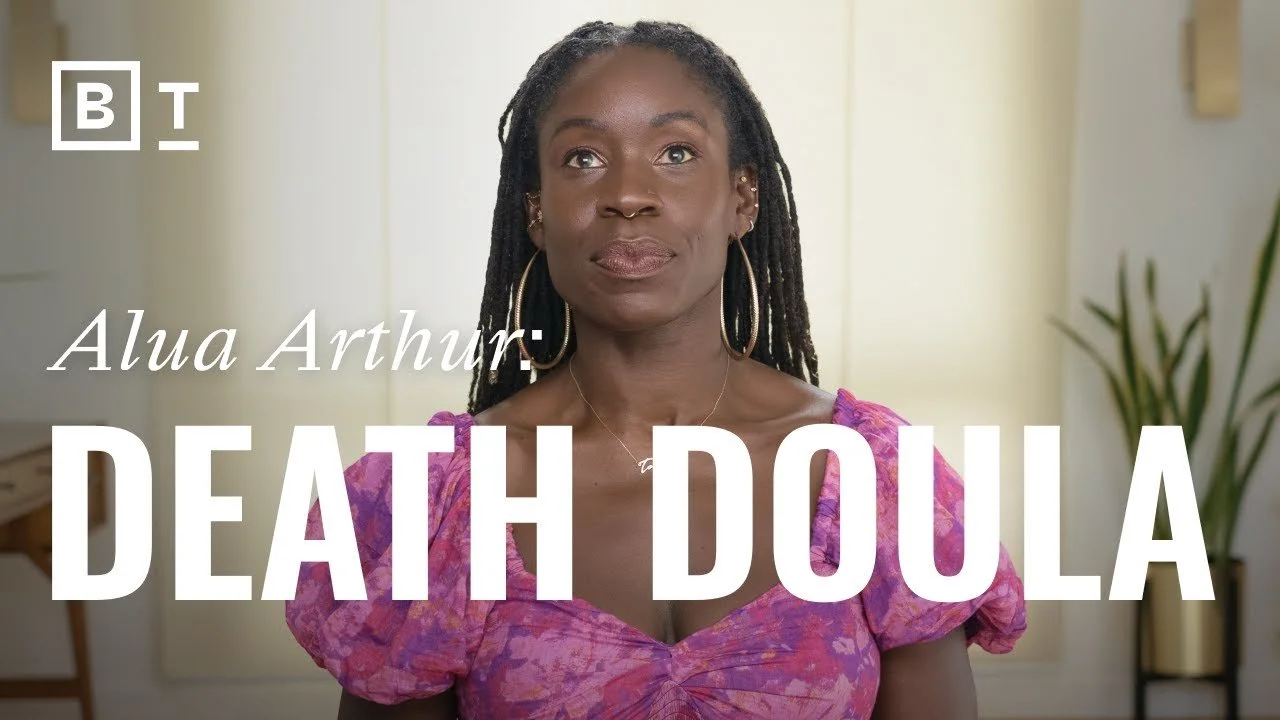
Interview with death doula Alua Arthur by Big Think on Youtube
Why now?
The growing visibility of death doulas is not an isolated trend. It sits at the intersection of several bigger shifts.
The death-positive movement has challenged the silence around death, while the pandemic made the consequences of dying alone painfully tangible. At the same time, ageing populations and overstretched care systems are pushing more responsibility onto families, with growing numbers of people caring for loved ones at home. These family caregivers often need support, too, not just with practical care, but with the emotional realities of dying and saying goodbye.
Our expectations of care are changing, too. Just as people increasingly seek personalised, holistic support around birth, health and wellbeing, they want more agency and human connection when it comes to dying. Meanwhile, changing family structures, more diverse belief systems and the decline of shared religious rituals are creating a need for new ways to navigate death and make meaning.
Social media and celebrity involvement are bringing these conversations into the mainstream, making alternative approaches more visible and acceptable.
Death doulas sit right at the intersection of these shifts: filling gaps in care, responding to changing cultural attitudes and helping people reclaim a sense of agency over dying. The need for human support isn't new, but the way we understand, organise and seek it out is changing.
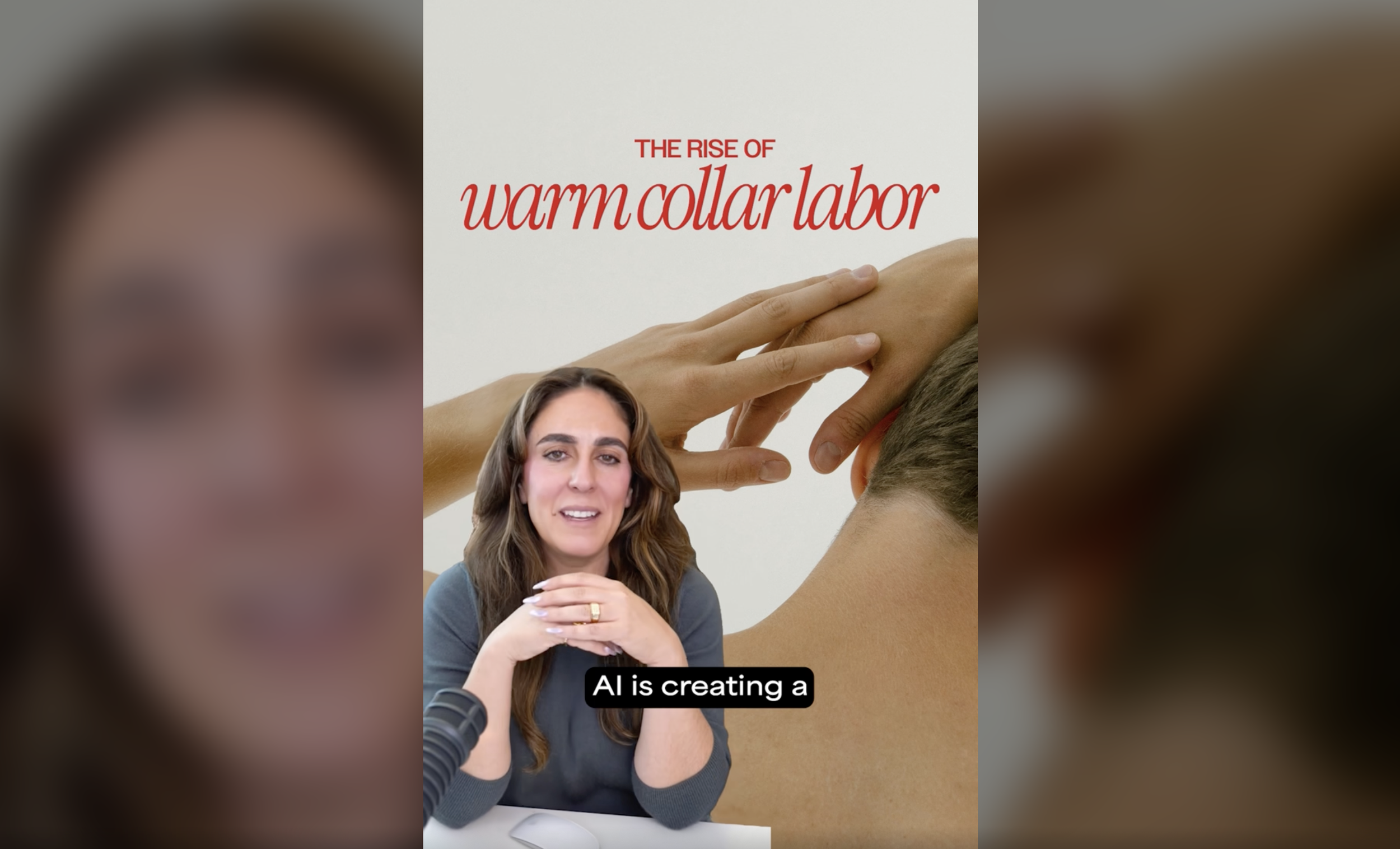
Video on how warm collar labor revolutionizes the job market by Jasmine Bina on Linkedin
When care becomes a service
In her recent essay on "warm collar labor," strategist Jasmine Bina describes an emerging economy built around emotional and relational work: services whose value lies not only in what someone does, but in the feeling of being cared for, witnessed or accompanied.
Professional bridesmaids, breakup doulas, rent-a-mourners, life or spiritual coaches and, increasingly, death doulas. Different services, but a similar proposition: someone will be there for you, with time and attention dedicated to your needs.
The underlying needs are not new. What is changing is the willingness and sometimes the necessity to pay someone to meet them.
Sociologist Arlie Russell Hochschild has written about the expanding "commodity frontier": the process through which activities and relationships once outside the market become commercial services. End-of-life care is a particularly revealing example because it exposes the tension between care as a human responsibility and care as something we can purchase.
There is a positive side to this shift: Death doulas can provide continuity and flexibility that families may not be able to offer. They can support relatives who are exhausted or overwhelmed, help people articulate their wishes, and make space for conversations that are difficult to have with loved ones. And this work deserves to be recognised and compensated. The fact that care has historically been provided by women, often unpaid, should not be a reason to expect it to remain free.
But what happens when we have to buy care because the structures that once helped provide it are no longer there?
Families may live further apart. Time is scarce. Community and religious institutions play different roles in many people's lives. Informal support networks can be fragile. The market responds to these gaps by creating new services, which can be valuable, but it can also make a collective challenge look like an individual one.
The opportunity is to recognise the value of professional care while also asking how we can build communities and systems in which people don't have to navigate dying alone in the first place.
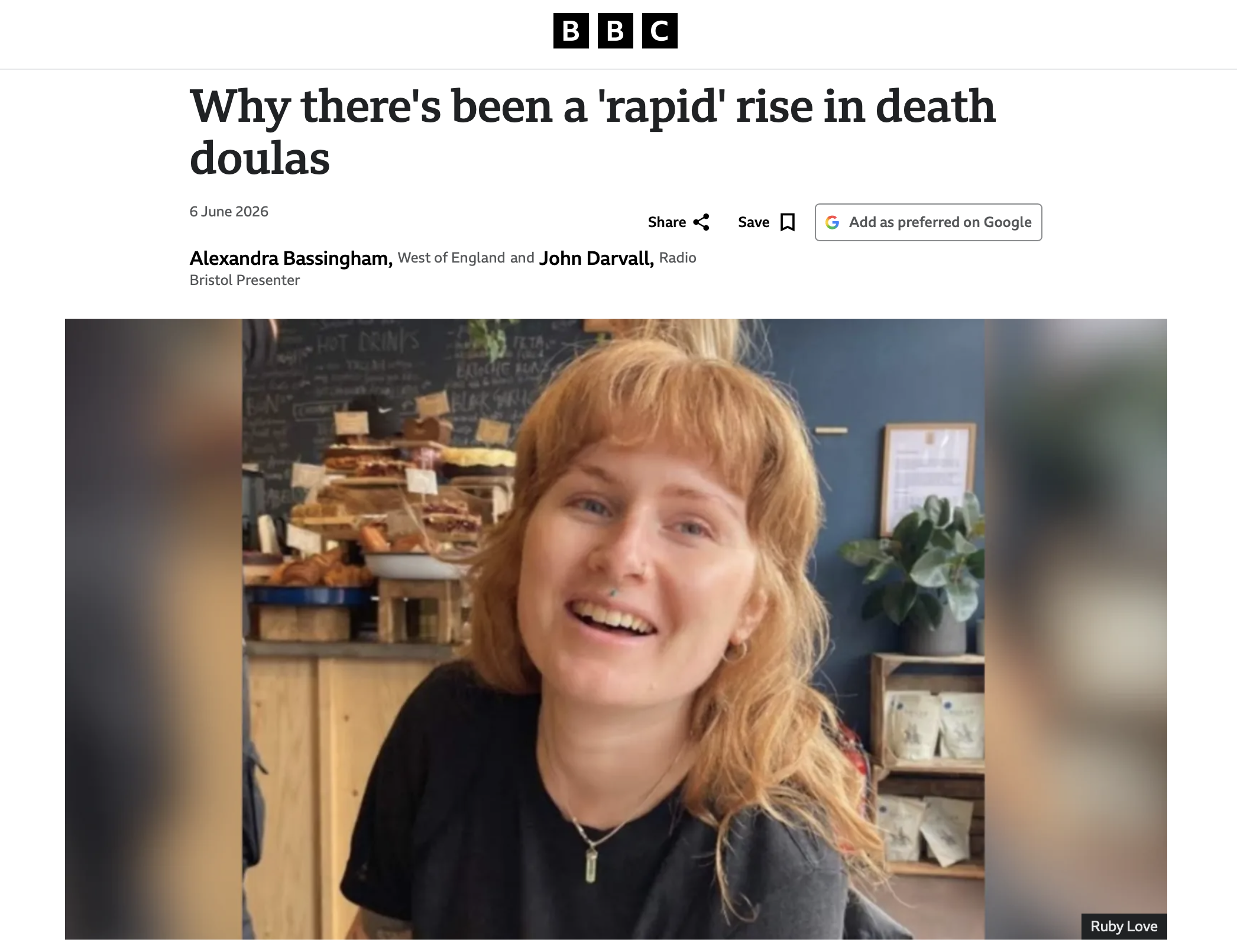
Screenshot of the BBC article “Why there's been a 'rapid' rise in death doulas” (6 June 2026)
A profession still taking shape
The death doula field is growing, but it is not yet a clearly defined profession. In the US, there is no universally recognised licensing body, and training and certification vary between organisations. That flexibility can be a strength as doulas come from different backgrounds and may offer different forms of support, but it also raises questions about training, boundaries, accountability and collaboration with medical teams.
The role is developing differently across countries. While end-of-life doulas are increasingly visible in the US and have a growing presence in the UK, the concept remains less established in parts of continental Europe. There is still work to do in explaining what doulas offer, how they complement existing care, and where their responsibilities begin and end.
There is also a practical issue: can this work provide a sustainable livelihood? A 2026 survey found that 73% of end-of-life doulas reported little or no income from their practice. The sample was limited, but it challenges the assumption that a growing profession automatically creates a viable business.
There is also a question worth asking about who is entering training and why. Not everyone who completes a death doula course intends to practise professionally. Many are drawn to the training for personal reasons: to become more present with the reality of dying, to feel better equipped if someone close to them is facing death, or simply to work through their own relationship with mortality.
The growth of training programmes and the growth of a professional field are not quite the same thing. And distinguishing between them matters if we are asking who will actually be available to accompany the dying.
Who gets to die well?
And there is a political dimension to this trend that deserves more attention. Access to good palliative care, culturally appropriate support, and a sense of control over the dying process is already unevenly distributed. Adding a privately paid layer of companionship risks deepening those inequalities.
Imagine a future in which some people can arrange a highly personalised death, with a doula, extensive family support, and carefully designed rituals. Others receive competent but time-limited institutional care. And those with the fewest resources navigate dying with very little relational support at all.
This is not a prediction that death doulas will create such a system. It is a question about the direction in which we are moving when more and more forms of care depend on private resources.
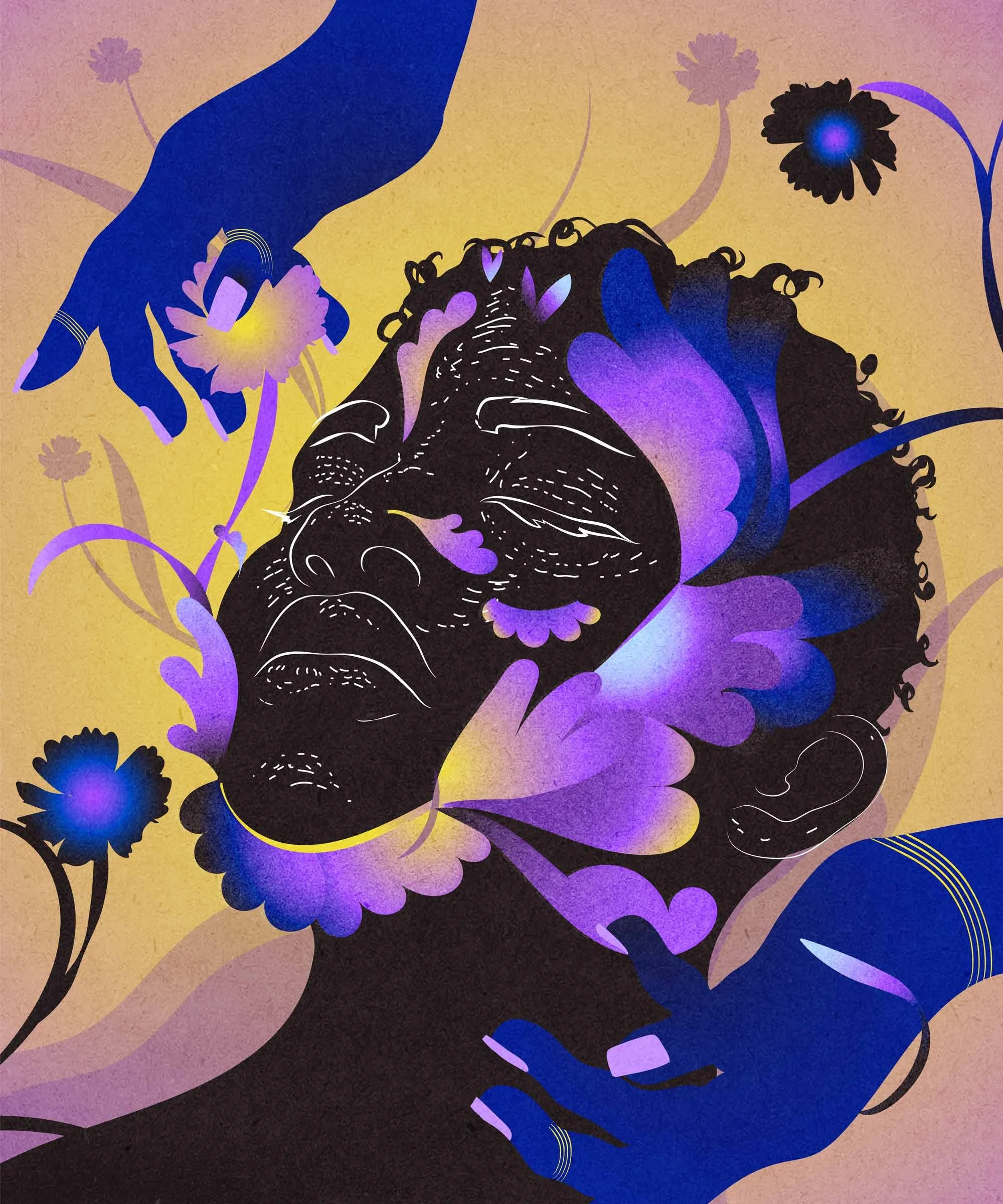
Illustration by Neko King, taken from the article “Black Grief Practitioners Are Protecting Black Life In Death”, written by Stephanie Long on Refinery29
Beyond the trend
I’m interested in death doulas not simply because they represent a growing area of death care, but because of what they reveal about the society we’re building.
We are rediscovering the importance of human presence at the end of life at precisely the moment when that presence is harder to provide. Care systems are under pressure. Families live further apart and carry more responsibility. The informal networks that once held people through dying have thinned out in many places. And into those gaps, new services are emerging.
Celebrity involvement is part of this story, and I think it’s worth celebrating. When recognisable people talk openly about death and their own experiences of loss, they bring a once-taboo subject into the mainstream. They open up conversations about what a good death might mean and how we want to be accompanied at the end of life.
Of course, there is a tension here. If support becomes something we have to arrange and pay for ourselves, not everyone will have equal access. Death doulas cannot fill every gap in healthcare or replace the wider support that families and communities need.
But their impact can reach beyond the people who hire them. As knowledge about dying spreads, more people can discover their options, prepare for the end of life and have conversations they might otherwise never have had. Much of this knowledge is now widely available. Even without a doula by their side, people can become better equipped to express their wishes and support someone they love.
Death doulas are not a replacement for existing care systems, but a complement to them. And they are a reminder of what care involves beyond medical treatment. Their growing visibility offers an opportunity not only to develop a new profession, but to make knowledge about dying more accessible to everyone.
>> Who would you want by your side at the end of your life and have you talked to them about it?
Thanks for reading!
> Thanks for reading GOOD GRIEF NEWS, a monthly newsletter on trends and fresh perspectives around death, grief and remembrance. You can see more of my work at goodgrief.me or stefanieschillmoeller.com and feel free to follow me on Instagram.
28.10.2026